
Written by: Hannah Heukeshoven, MS, LAPC
It’s been another long week or even two between your therapy sessions, and when you sit down with your therapist, you realize, “I haven’t done anything different this time that I said I would do or try.” It’s a frustrating realization, but life can get in the way. Maybe you don’t have the time to sit down and journal, or the YouTube videos on breathwork were boring and hard to keep up with. You might have even lost that worksheet the day after your therapist gave it to you. It can be disheartening and frustrating. Thankfully, therapist-approved apps can help you keep working on different goals in a fun, productive, and easy way. Here are some of my favorite recommendations!
Finch

Finch is a classic, and the gold standard of mental health-focused apps. Finch meets you where you are and allows for flexibility depending on what goals you would like to achieve. Finch allows you to take care of a cute bird pet and yourself- simultaneously. Whether it’s basic self-care, increasing physical activity, connecting with loved ones, trying something new, or connecting with yourself on a deeper level, there’s a premade goal for it. You can even add your own goals manually and link different in-app activities, prompts, or exercises. You can work towards your goals solo, or add friends and complete goals together.
In the activities section of the app, there are even more helpful tools. Journaling prompts, meditation guides, breathing exercises, physical exercises, and even their “First Aid Kit” which walks you through different, research-backed exercises your therapist probably has already recommended to you. They even have a button that will connect you to a local helpline in your area. This app is perfect for someone who may need to “gameify” their experiences to increase feelings of motivation, or just enjoy a cute interface that changes with the seasons and can meet them where they are.
While Finch does have a free version, some of these tools can be stuck behind a pay wall. The creators of Finch run an awesome program called “The Guardian Program” that anyone can apply to. This gives you a month of the paid version for free, and adjusted payment plans if you want to continue utilizing this service, some as low at $10 for the whole year! And the free version is still an amazing tool, with many options still available.
How We Feel
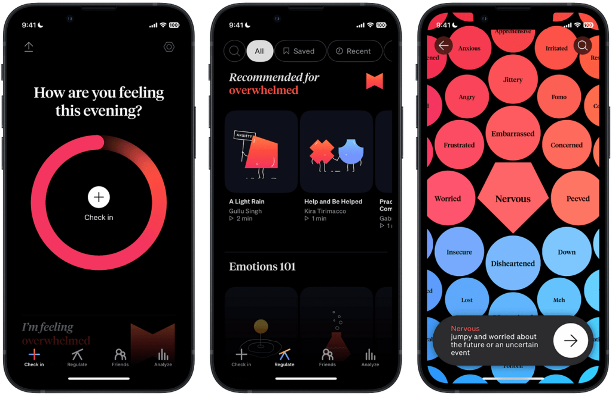
How We Feel is an emotion-focused journaling tool to use if you are working on skills related to emotion recognition and naming, while also giving different strategies to help work through these emotions.
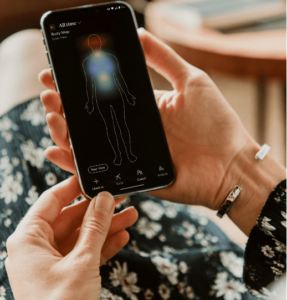
How We Feel will prompt you to check in with your emotional experience. Once you pick the emotion you are feeling, you can also list external factors for this emotion such as: what you are doing, who you are with, where you are, and where and how you are feeling the emotion in your body. You can be prompted up to 4 times a day and can either pick specific times you would like to be prompted or be prompted at a “surprise time” between a set of hours (i.e., Afternoon Surprise from 12 PM- 5 PM).
How We Feel also has a plethora of built-in tools, all easy to use. Options such as breathing exercises with tactile feedback, mindfulness tools, reframing tools, connection-focused activities, and more- there is something for everyone. Unlike Finch, How We Feel is a more minimalist, mindful approach to mental health that focuses on deep reflection, self-connection, and somatic emotion-focused experiences. This app is perfect for someone who wants to understand their emotions and experiences better, enjoys or is open to journaling but doesn’t know where to start, and wants to build skills that allow you to express yourself in a healthy and safe manner.
How We Feel is completely free, and is run through a non-profit organization stemming from Yale research on emotions and well-being.
Conclusion
Apps can help us continue to utilize the skills we are learning in sessions, and make access to these skills easy. While I will always encourage those who use them to be mindful what they’re sharing- the overall benefit from these tools when used properly can outweigh possible risk that could be associated with using them. Both of these apps are rooted in real benefits to mental health, and each have different usages that can help different people no matter where you are in your therapy journey.
To schedule an appointment on telehealth or at our office in Pittsburgh, PA contact us here or email info@elementspgh.com or call 412-587-6020.
The information contained in this blog does not replace professional treatment or diagnosis and is for educational purposes only.
